Spanish National Research Awards 2026
· Daniel Maspoch (ICN2)
· Katherine Villa (ICIQ)
ERC Advanced Grants 2025
· Eduard Batlle (IRB Barcelona)
· Pilar Prieto (UPF)
· Luis Serrano (CRG)
Catalan National Research Awards 2025
· Luis Serrano Pubul (CRG)
· Katherine Villa (ICIQ)
Introducing ICREA’t, the portal for disseminating the research carried out by the ICREAs.
HIGHLIGHTS
Trustworthy AI in healthcare: A symphony of many voices
Lekadir, Karim (UB)
Engineering SciencesHighly predictive simple models of human mobility
Guimerà Manrique, Roger (URV)
Experimental Sciences & MathematicsTracking T Cells in Time and Space to Unlock Personalized Immunotherapy in Childhood Cancer
Heyn, Holger (CNAG)
Life & Medical SciencesElectrolyte Design Principles for Renewable Fuels and Chemicals
Escudero Escribano, María (ICN2)
Experimental Sciences & MathematicsAre memories containing multiple sensory modalities better remembered than single-modality ones?
Soto-Faraco, Salvador (UPF)
Social & Behavioural SciencesNoninvasive cardiac modulation via triplet-sensitized photoswitching in the phototherapeutic window
Moth-Poulsen, Kasper (UPC, CSIC - ICMAB)
Experimental Sciences & MathematicsBlood stem cells in health and lifespan
Florian, Maria Carolina (IDIBELL)
Life & Medical SciencesWhen Disorder Unlocks: Delocalization and Quantum Geometry in Magic-Angle Graphene
Roche, Stephan (ICN2)
Engineering Sciences
ICREA IS AN INSTRUMENT OF THE CATALAN GOVERNMENT
ICREA is a public institution 100% funded by the Generalitat de Catalunya.
ICREA is an institution without walls. It works hand in hand with Catalan universities and research centres to integrate ICREA research professors in the Catalan research system.
ICREA offers permanent, tenured positions to researchers from all over the world to come and work in Catalonia.
Over the years these positions have become a synonym of global academic excellence.

ICREA COMMUNITY
ICREA Research Professors form a vibrant community of scientists and researchers in all areas of knowledge that contribute to the advancement of humankind by exploring, interpreting and questioning.
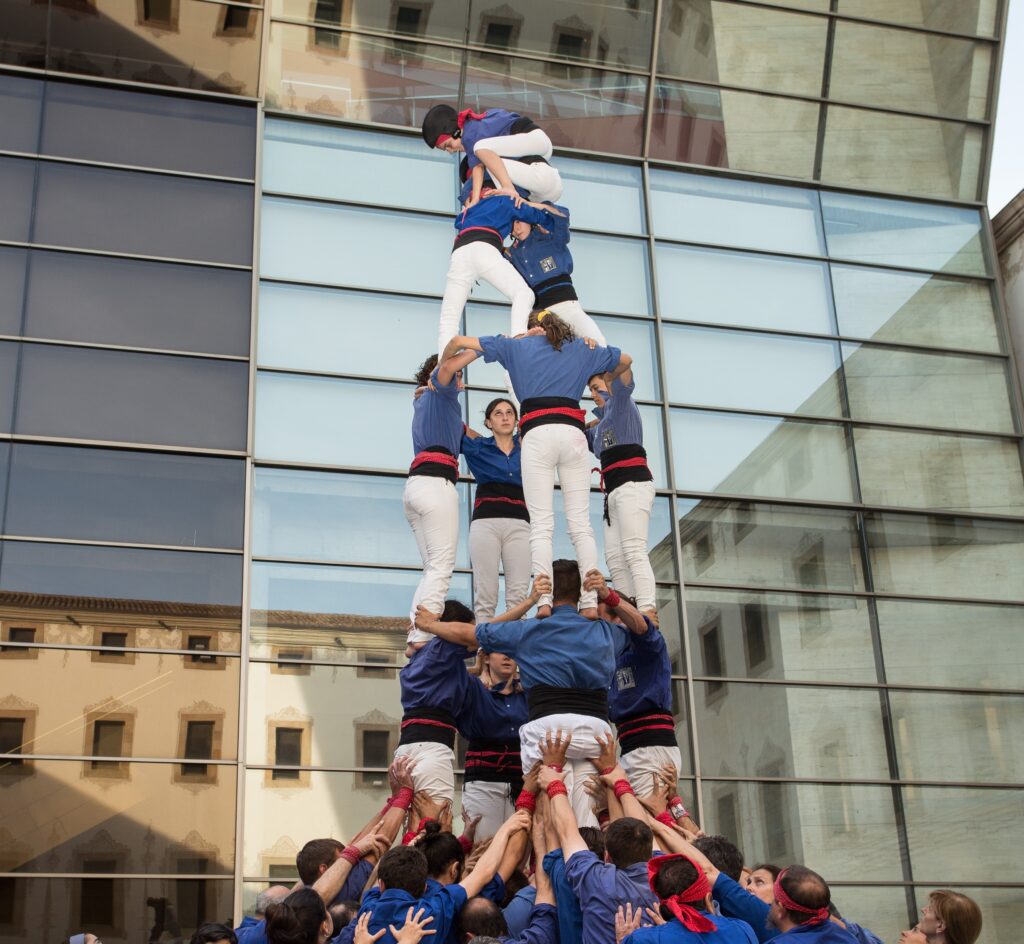
UNIVERSITIES AND RESEARCH CENTRES IN CATALONIA
ICREA would not make any sense without the dense network of host institutions that are actively involved in research in Catalonia.
THE NEW ICREAs
ICREA is an expanding community. Each year, new researchers join ICREA
after the ICREA call. This is a list of the most recent incorporations. We
would like to give them all a very warm welcome to the ICREA
community: Benvinguts!
Barriobero Vila, Pere
Engineering Sciences
Universitat Politècnica de Catalunya (UPC)
I work on the design of smarter, stronger, and more sustainable metals for the technologies of tomorrow. For this, I use advanced manufacturing, 3D printing and microstructure engineering, supported by laboratory and synchrotron techniques, to watch how metals transform in real time.
ANNUAL REPORT
These research reports summarize the work done during a year.
Publications are the most visible part of research, but we must also take into consideration other elements that show the contribution of our researchers to the improvement of the Catalan R+D system: creation of new research teams and opening of new research lines, consolidation of existing teams and research areas, mentoring of doctoral dissertations, teaching at all academic levels, etc.
Thus, the reports quantify not only the scientific production of our researchers but also their broader impact.