Icrea Call
ICREA call 2026 is open for the areas:
- Social and Behavioural sciences
- Humanities
- Life and Medical sciences
ICREA call 2026 is open for the areas:
- Social and Behavioural sciences
- Humanities
- Life and Medical sciences
Spanish National Research Awards 2025
· Josep Dalmau Obrador (FRCB-IDIBAPS)
· Carme Rovira i Virgili (UB)
· Arnau Sebé-Pedrós (CRG)
ICREA call 2026 is open for the areas:
- Social and Behavioural sciences
- Humanities
- Life and Medical sciences
ICREA call 2026 is open for the areas:
- Social and Behavioural sciences
- Humanities
- Life and Medical sciences
ERC Advanced Grants 2024
· Marco Armiero (UAB)
· Jan Eeckhout (UPF)
· Leo Wanner (BSC-CNS)
ICREA call 2026 is open for the areas:
- Social and Behavioural sciences
- Humanities
- Life and Medical sciences
Premio Rei Jaume I – 2025
· Jan Eeckhout (UPF)
· Núria López-Bigas (IRB Barcelona)
· Victoria Reyes García (UAB)
HIGHLIGHTS
Navigating the Brain: Uncovering the Secret to Efficient Communication
Serrano, M. Ángeles (UB)
Experimental Sciences & MathematicsCan We Predict Crime? Should We?
Castillo Ocaranza, Carlos (UPF)
Engineering SciencesHunting Human and Animal Trophies in the East Asian War of 1592–1598
Clements, Rebekah (UAB)
HumanitiesNanostructure Enhancement of Metallic Films with a Click
Merkoçi, Arben (ICN2)
Engineering SciencesEndothelium-inspired coatings to improve blood compatibility of medical devices
Rodriguez Emmenegger, César (IBEC)
Engineering SciencesFossils of ancient chromosomes discovered
Martí-Renom, Marc (CNAG)
Life & Medical SciencesA Novel, Groundbreaking Approach to the History of Archaeology
Díaz-Andreu García, A. Margarita (UB)
Humanities
ICREA IS AN INSTRUMENT OF THE CATALAN GOVERNMENT
ICREA is a public institution 100% funded by the Generalitat de Catalunya.
ICREA is an institution without walls. It works hand in hand with Catalan universities and research centres to integrate ICREA research professors in the Catalan research system.
ICREA offers permanent, tenured positions to researchers from all over the world to come and work in Catalonia.
Over the years these positions have become a synonym of global academic excellence.

ICREA COMMUNITY
ICREA Research Professors form a vibrant community of scientists and researchers in all areas of knowledge that contribute to the advancement of humankind by exploring, interpreting and questioning.
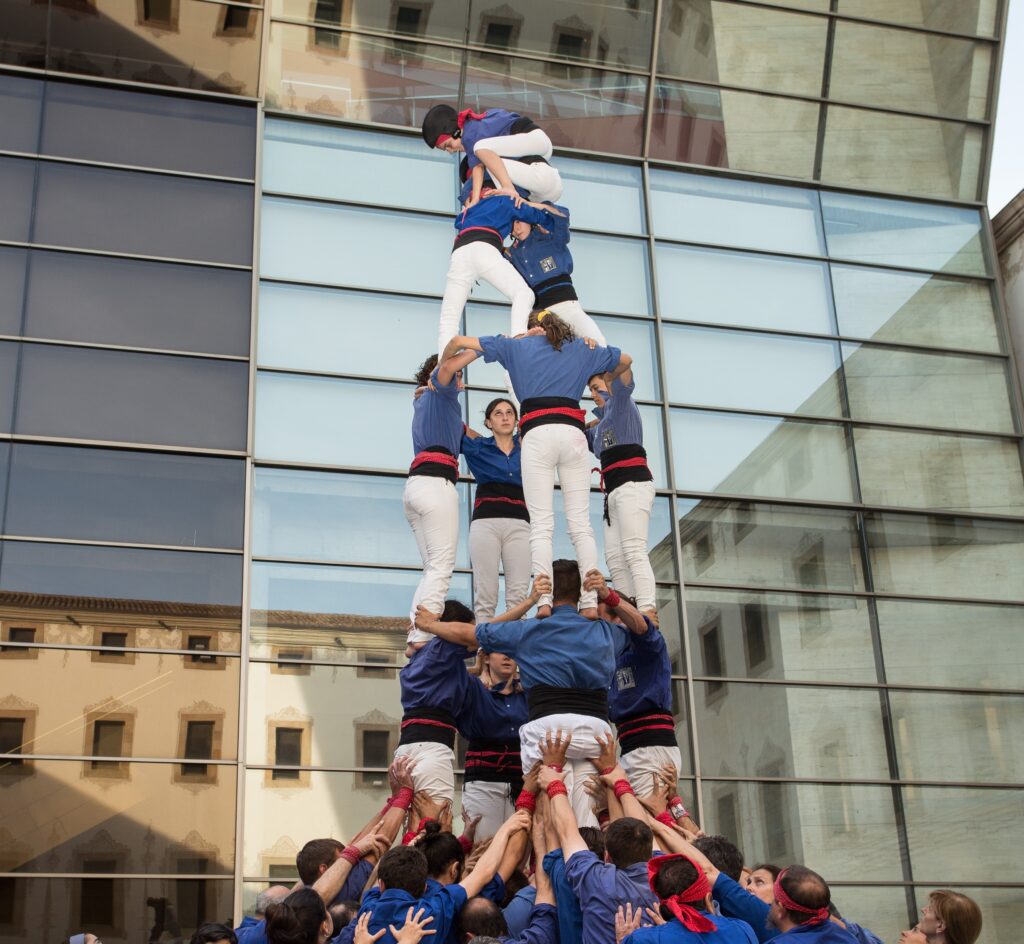
UNIVERSITIES AND RESEARCH CENTRES IN CATALONIA
ICREA would not make any sense without the dense network of host institutions that are actively involved in research in Catalonia.
THE NEW ICREAs
ICREA is an expanding community. Each year, new researchers join ICREA
after the ICREA call. This is a list of the most recent incorporations. We
would like to give them all a very warm welcome to the ICREA
community: Benvinguts!
Ahmad, Shahzada
Engineering Sciences
Universitat de Barcelona (UB)
My research mission is to address societal challenges for renewable energy. For this, we design and develop innovative materials, uncover the kinetics and interface to elucidate the mechanisms at the molecular level, it also expands to low power switching materials for neuromorphic application.
Alert Zenón, Ricard
Experimental Sciences & Mathematics
Universitat de Barcelona (UB)
As a theoretical physicist, I work to develop the physics of living matter, particularly at the scale of cells and tissues. We aim to understand how living matter moves on its own and shapes itself to perform biological functions.
Berrocal, José Augusto
Experimental Sciences & Mathematics
Institut Català d'Investigació Química (ICIQ)
Our group is interested in controlling and understanding the behavior of polymer materials. We combine organic, supramolecular, and polymer chemistry to create stimuli-responsive polymers that change their properties when stimulated by heat, light, chemicals, or mechanical force.
Caño-Delgado, Ana I.
Life & Medical Sciences
Centre de Recerca en Agrigenòmica (CRAG)
I study how steroid hormones control plant development and environmental adaptation through spatially defined signaling mechanisms. By integrating molecular genetics, cell biology and systems approaches, my research advances fundamental plant science and translates into improved crops in agriculture.
Cazorla, Claudio
Engineering Sciences
Universitat Politècnica de Catalunya (UPC)
As a computational materials scientist, my research focuses on using advanced quantum and classical simulations, machine learning, and artificial intelligence to understand and design functional materials for energy applications, tackling phase behavior, dynamics, and structure-property relationships.
Font Ribera, Andreu
Experimental Sciences & Mathematics
Institut de Física d'Altes Energies (IFAE)
I am an observational cosmologist, what means that I use astronomical data to study the origin, evolution and fate of the Universe. In particular, I look at the spatial distribution of millions of galaxies and distant quasars to provide precise measurements of the expansion history of the Universe.
Hammond, Ashley
Humanities
Institut Català de Paleontologia Miquel Crusafont (ICP)
Ashley Hammond’s research focuses on the discovery, description, and analysis of the fossil record for ape and human evolution, with special interests in biological form and function of the postcranial skeleton.
Neu, Gergely
Engineering Sciences
Universitat Pompeu Fabra (UPF)
My research is concerned with the mathematical analysis of machine learning algorithms and AI systems, particularly in the context of sequential-decision making where such systems are used to make predictions and take actions in a reactive environment.
Villa Gómez, Katherine
Experimental Sciences & Mathematics
Institut Català d'Investigació Química (ICIQ)
My research focuses on creating advanced photocatalytic systems for sustainable applications, from water purification to waste valorization. In parallel, we engineer artificial micromotors that use light to move, interact and self-assemble into adaptive materials for environmental sensing.
ANNUAL REPORT
These research reports summarize the work done during a year.
Publications are the most visible part of research, but we must also take into consideration other elements that show the contribution of our researchers to the improvement of the Catalan R+D system: creation of new research teams and opening of new research lines, consolidation of existing teams and research areas, mentoring of doctoral dissertations, teaching at all academic levels, etc.
Thus, the reports quantify not only the scientific production of our researchers but also their broader impact.